

Introduction Swing trading is a popular trading strategy that involves holding positions for several days to weeks to profit from short- to medium-term price movements. It offers a balanced approach between the rapid pace of day trading and the long-term commitment of investing. This article will cover the basics of swing trading, including key principles, strategies, tools, and risks. What is Swing Trading? Swing trading aims to capture gains from an asset’s price movement over a few days to weeks. Traders seek to profit from “swings” in the market, buying when they expect prices to rise and selling when they expect prices to fall. Key Principles of Swing Trading Medium-Term Focus: Swing traders hold positions for a few days to weeks, balancing between short-term and long-term strategies. Technical Analysis: Heavy reliance on technical analysis to identify entry and exit points. Market Trends: Understanding and capitalizing on market trends and patterns is crucial. Essential Tools for Swing Trading Trading Platform: A reliable trading platform with advanced charting tools and technical indicators is essential. Brokerage Account: A brokerage that offers competitive fees and fast execution is important for maximizing profits. Charting Software: Advanced charting software helps in analyzing technical patterns and indicators. Common Swing Trading Strategies Trend Trading: Identifying and following the direction of the market trend. Buy in uptrends and sell in downtrends. Counter-Trend Trading: Trading against the prevailing trend by identifying potential reversals. Breakout Trading: Entering trades when the price breaks out of a defined range, expecting the price to continue in the breakout direction. Retracement Trading: Buying during short-term price drops in an uptrend or selling during short-term price rises in a downtrend, expecting the trend to resume. Key Indicators and Analysis Moving Averages: SMAs and EMAs help identify the direction of the trend and potential entry/exit points. MACD (Moving Average Convergence Divergence): This helps identify changes in the strength, direction, momentum, and duration of a trend. RSI (Relative Strength Index): RSI indicates overbought or oversold conditions, helping to identify potential reversal points. Fibonacci Retracement: This tool helps identify potential support and resistance levels based on the Fibonacci sequence. Risk Management Stop-Loss Orders: Setting stop-loss orders helps limit potential losses by automatically selling a position if it reaches a certain price. Position Sizing: Proper position sizing ensures that no single trade significantly impacts the overall portfolio. Diversification: Spreading investments across different sectors or assets helps manage risk. Advantages and Disadvantages of Swing Trading Advantages Less Time-Consuming: Compared to day trading, swing trading requires less constant monitoring. Flexibility: Allows traders to take advantage of short- to medium-term market movements without the need for long-term commitments. Potential for Significant Gains: Capturing swings in the market can lead to substantial profits. Disadvantages Market Risk: Holding positions overnight exposes traders to risks from news and events that can affect the market. Requires Patience: Swing trading requires patience to wait for the right trading opportunities and to hold positions until the trade thesis plays out. Technical Knowledge Needed: Successful swing trading requires a strong understanding of technical analysis and chart patterns. Conclusion Swing trading offers a balanced approach to trading, combining elements of both short-term and long-term strategies. It requires a solid understanding of technical analysis, effective risk management, and patience to identify and capitalize on market swings. For those willing to put in the time to learn and develop their skills, swing trading can be a rewarding and profitable trading strategy.
How to Read Stock Charts and Graphs
Introduction Reading stock charts and graphs is a fundamental skill for any investor or trader. These visual tools provide a wealth of information about a stock’s historical performance, helping you make informed decisions. This article will guide you through the basics of reading stock charts and graphs, covering essential elements and key indicators. Understanding the Basics What is a Stock Chart? A stock chart is a graphical representation of a stock’s price movements over a specific period. It displays historical prices, volume, and other key data points, helping investors analyze trends and make predictions about future price movements. Types of Stock Charts Line Chart: The simplest form, showing the closing prices over a period. Bar Chart: Displays the open, high, low, and close prices for each period. Candlestick Chart: Similar to bar charts but more visual, with color-coded bodies to show price movements. Key Elements of a Stock Chart Time Frame: The time frame of a chart can vary from minutes to decades. Common time frames include: Intraday: Shows price movements within a single trading day. Daily: Displays daily closing prices over weeks, months, or years. Weekly/Monthly: Provides a longer-term view of the stock’s performance. Price Axis: The vertical axis (y-axis) represents the stock’s price. This axis shows the range of prices over the selected time frame. Time Axis: The horizontal axis (x-axis) represents the time period being analyzed. This axis shows the progression of time from left to right. Volume: Volume bars typically appear at the bottom of the chart, showing the number of shares traded during a specific period. Higher volume often indicates stronger interest or movement in the stock. Reading Candlestick Charts Candlestick charts are popular due to their visual appeal and detailed information. Each “candlestick” represents a specific period’s price movement. Components of a Candlestick Body: The thick part of the candlestick shows the opening and closing prices. Green/White Body: Indicates the stock closed higher than it opened (bullish). Red/Black Body: Indicates the stock closed lower than it opened (bearish). 2. Wicks (Shadows): The thin lines above and below the body show the highest and lowest prices during the period. Upper Wick: The highest price. Lower Wick: The lowest price. Example Bullish Candlestick: A green body with a lower open and a higher close. Bearish Candlestick: A red body with a higher open and a lower close. Key Indicators and Patterns Moving Averages Simple Moving Average (SMA): The average stock price over a specific period (e.g., 50-day SMA). Exponential Moving Average (EMA): Similar to SMA but gives more weight to recent prices. Relative Strength Index (RSI) RSI: A momentum indicator that measures the speed and change of price movements, typically on a scale from 0 to 100. Overbought: RSI above 70 suggests the stock may be overbought. Oversold: RSI below 30 suggests the stock may be oversold. Bollinger Bands Bollinger Bands: Consist of a middle SMA band with upper and lower bands. These bands widen during periods of high volatility and contract during periods of low volatility. Upper Band: Often acts as a resistance level. Lower Band: Often acts as a support level. Support and Resistance Support Level: A price level where a stock tends to find buying interest and does not fall below easily. Resistance Level: A price level where a stock tends to find selling interest and does not rise above easily. Analyzing Trends Uptrend Definition: A series of higher highs and higher lows. Indicator: Indicates a bullish market sentiment. Downtrend Definition: A series of lower highs and lower lows. Indicator: Indicates a bearish market sentiment. Sideways Trend (Consolidation) Definition: When a stock trades within a range, showing neither an uptrend nor a downtrend. Indicator: Indicates market indecision. Example Analysis Let’s analyze a hypothetical stock chart using these elements: Candlestick Chart: Over a 6-month period, we notice several green candlesticks indicating bullish days and red candlesticks indicating bearish days. Moving Averages: The 50-day SMA is above the 200-day SMA, suggesting a long-term uptrend. Volume: Spikes in volume during price increases suggest strong buying interest. RSI: Currently at 75, indicating the stock may be overbought. Support and Resistance: The stock has consistently bounced back from $50 (support) but struggles to break above $70 (resistance). Conclusion Reading stock charts and graphs is a vital skill for anyone involved in the stock market. By understanding the basic elements, key indicators, and how to analyze trends, you can make more informed trading and investment decisions. Remember, practice and continuous learning are key to mastering the art of chart reading.
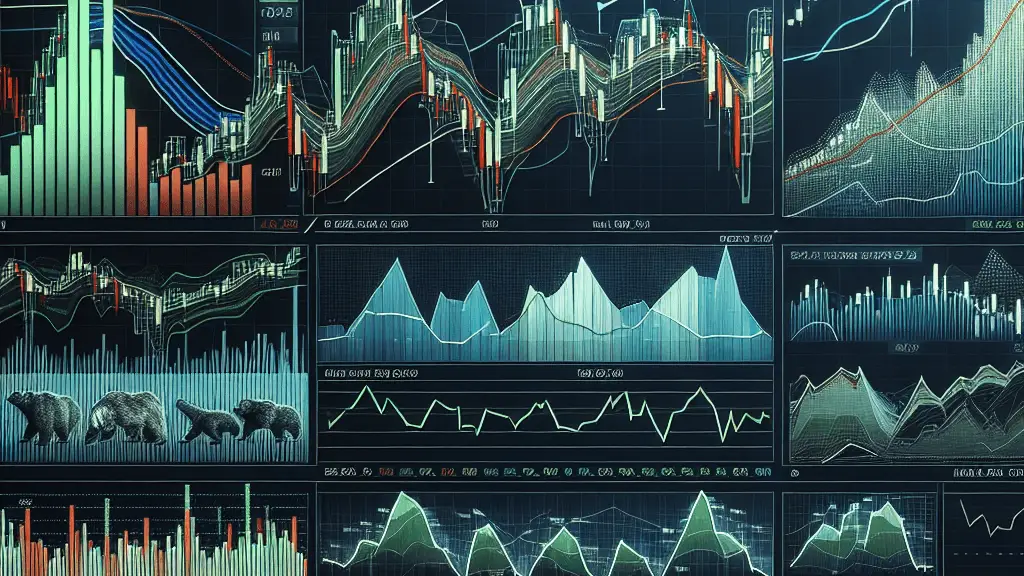
Using Technical Indicators for Trading Stocks
Thinking about investing in stocks? Technical indicators can help you make better trading choices. They look at past prices to predict future trends. This helps you know when to buy or sell shares. By using these indicators, you can base decisions on data instead of emotions. Let’s learn more about how these indicators function and how to use them smartly in stock trading. Understanding Technical Indicators Technical analysis involves using technical indicators to analyze price movements. Traders rely on indicators like moving averages or Fibonacci levels. These indicators help identify entry or exit points for trades. They also gauge momentum, volatility, support, and resistance levels. Understanding these signals is important for interpreting price trends accurately. Traders can make informed decisions when trading forex, shares, commodities, or indices. Oscillators like RSI or stochastic oscillators can show overbought or oversold conditions. Recognizing these signals helps anticipate trend reversals or confirm trends. Using indicators can enhance trading strategies and improve success in financial investments. Importance of Technical Indicators in Stock Trading Technical indicators are tools used in stock trading. They help analyze price movements and trends. Some common indicators are moving averages, Fibonacci retracement, and RSI. Traders make decisions based on historical data and indicators like MACD or stochastic oscillators. These tools help identify overbought/oversold conditions, support/resistance levels, and trend reversals. Having knowledge of different technical indicators is important. Each indicator works best in specific market conditions. For instance, RSI is good for trend strength, while Williams Percent Range is useful for identifying overbought/oversold conditions. Combining various indicators gives traders a full picture. This helps in trading stocks, indices, or commodities successfully on platforms like Thinkorswim. Types of Technical Indicators Moving Averages A moving average in technical analysis calculates an average price over a specific time period to smooth out price movements. This helps traders identify trends by reducing the impact of short-term price fluctuations, making it easier to spot the overall price trend. For example, when a short-term moving average crosses above a long-term moving average, it can signal a potential uptrend; the opposite may indicate a downtrend. By observing how price movements interact with different moving averages, traders can determine potential support and resistance levels, identify overbought or oversold conditions, and anticipate trend reversals. This tool is commonly used in financial markets like forex, shares, indices, and commodities to analyze price action and determine potential entry and exit points. Traders combine moving averages with other technical indicators like the relative strength index (RSI) or MACD to better gauge market momentum and make informed decisions when trading stocks. MACD (Moving Average Convergence Divergence) MACD is a technical indicator in stock trading. It helps analyze price movements and spot trend reversals. To calculate MACD, subtract the 26-day EMA from the 12-day EMA. Traders use MACD to see if a stock is overbought or oversold. When MACD goes above the signal line, it indicates a bullish trend. If it crosses below, it suggests a bearish trend. This crossover gives insights into future price movements. Combining MACD with RSI or Bollinger Bands informs traders in stocks, forex, indices, and commodities. It helps assess trend strength and find entry or exit points on platforms like Thinkorswim. Stochastic Oscillator A Stochastic Oscillator is used in stock trading. It helps determine momentum and strength of price movements. It compares a closing price to a price range over a specific period. This helps identify overbought or oversold conditions. Traders analyze price action to make decisions on buying or selling. They trade shares, indices, commodities, or forex. Common parameters include moving averages, resistance levels, and volatility. They help gauge potential price trends and reversals. The Stochastic Oscillator, along with indicators like MACD, RSI, and Bollinger Bands, is important for traders. It helps assess trend strength and find potential stocks for trading. In technical analysis, the Stochastic Oscillator gives insights into price movement. This guides traders in financial decisions. Relative Strength Index (RSI) The Relative Strength Index is a popular technical indicator in stock trading analysis. It helps identify price trends, momentum, and potential reversals. By comparing recent price movements, the RSI shows if a stock is overbought or oversold. This info is crucial for deciding entry and exit points. For instance, an RSI above 70 suggests overbought conditions, hinting at a price reversal. An RSI below 30 indicates oversold levels, signaling a potential buy opportunity. Understanding these RSI levels is vital for traders making informed decisions. It’s a key tool for navigating market volatility and making profitable trades. Bollinger Bands Bollinger Bands are easy to calculate. They use a moving average and two standard deviations above and below it. When trading stocks, Bollinger Bands show how volatile a security is. Traders look for potential price movements by watching when a stock’s price hits the upper or lower band. This signal overbought or oversold conditions. To make informed trading decisions, traders often combine Bollinger Bands with other technical indicators like the Relative Strength Index or Moving Average Convergence Divergence (MACD). This helps confirm signals. By studying how prices interact with the bands in different market conditions, traders can gauge the strength of a trend and identify possible reversal points. Fibonacci Retracement Fibonacci Retracement is a tool used in stock trading to find support and resistance levels. Traders use Fibonacci levels to pinpoint where a stock’s price might change direction. The Fibonacci sequence guides these levels. This sequence adds the previous two numbers to get the next one. Traders apply Fibonacci Retracement to study price trends, momentum, and market volatility. It helps them predict if a stock’s price will reverse or keep going up or down. By placing Fibonacci levels on a price chart, traders can spot areas where a stock may reverse direction. They often combine this tool with moving averages, MACD, RSI, and Bollinger Bands for better trade signals. Understanding Fibonacci Retracement helps traders analyze price moves and make smart decisions when trading stocks, indices, or commodities. Common Technical Indicators